

On World Environment Day 2026, the Living Shoreline initiative in the Sundarbans demonstrates how Nature-Based Solutions can help protect vulnerable coastlines and biodiversity and build resilience to rising sea levels.
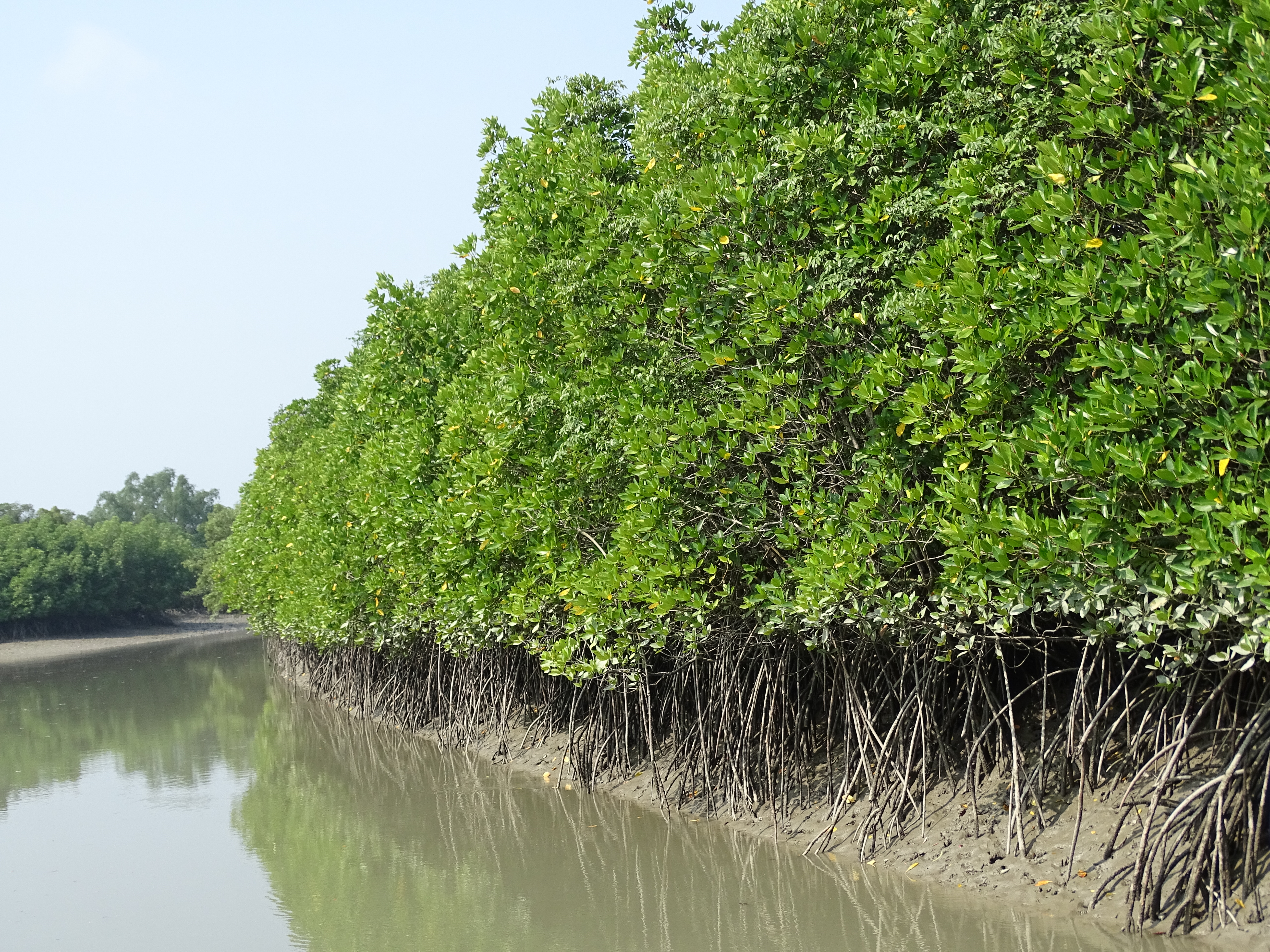
The Sundarbans, the world’s largest mangrove habitat, is home to diverse species of mammals, reptiles, birds, and plants and is inhabited by lakhs of people. It is a UNESCO World Heritage Site that covers 48 mangrove forest islands and 35 inhabited islands, with over 4.5 million people living in and around them. The inhabitants of Sundarbans primarily depend on natural resource-based livelihoods, such as agriculture, aquaculture, honey collection, and fishing. However, this unique region faces a serious threat from rising sea levels. Slow-onset processes, such as sea level rise and erosion and accretion, and rapid-onset events, such as cyclones, can lead to the loss of lives, land, livelihoods, assets, and food and water security, threatening the future of the Sundarbans.
Between 2000-2020, the Sundarban Biosphere Reserve witnessed a significant increase in net land loss, about 550 hectares, equivalent to 770 football fields in a year, surpassing the rate observed in the preceding decade. Sundarban’s inhabitants rely on nearly 1,800 km of earthen embankments first erected in the 18th century to protect their land and homes from tidal flooding. The embankments (concrete or earthen structures) have made human settlements possible by keeping saline water at bay. However, during the tidal cycles, the toe of the embankments often erodes, leading to slope instability and vertical collapse of the protective structure.
A NATURAL SOLUTION TAKES ROOT
WWF-India, the Centre for Climate and Environmental Studies at the Indian Institute of Science Education and Research, Kolkata, and Calcutta University, together with government authorities, are working on Nature-based Solutions (NbS) to protect the vulnerable Sundarbans region.
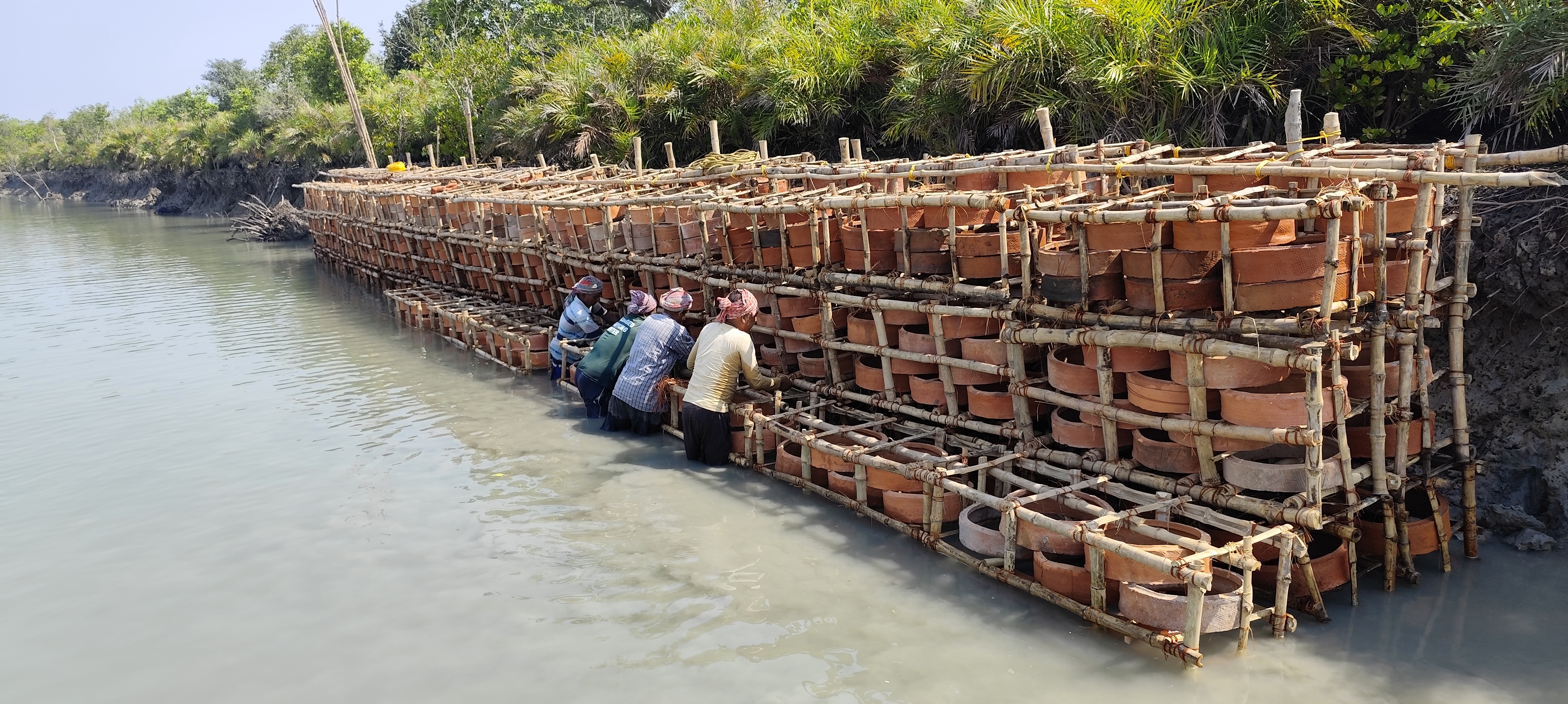
A total of 8,820 terracotta silt traps have been installed foreshore of the embankment, covering a total area of 3684 square metres across seven sites in the Sundarbans between May 2023 and August 2024. These structures work by capturing and holding sediment, thereby allowing vegetation to take root and stabilising the shoreline. Terracotta was consciously used to ensure that the natural ecosystem remains undisturbed.
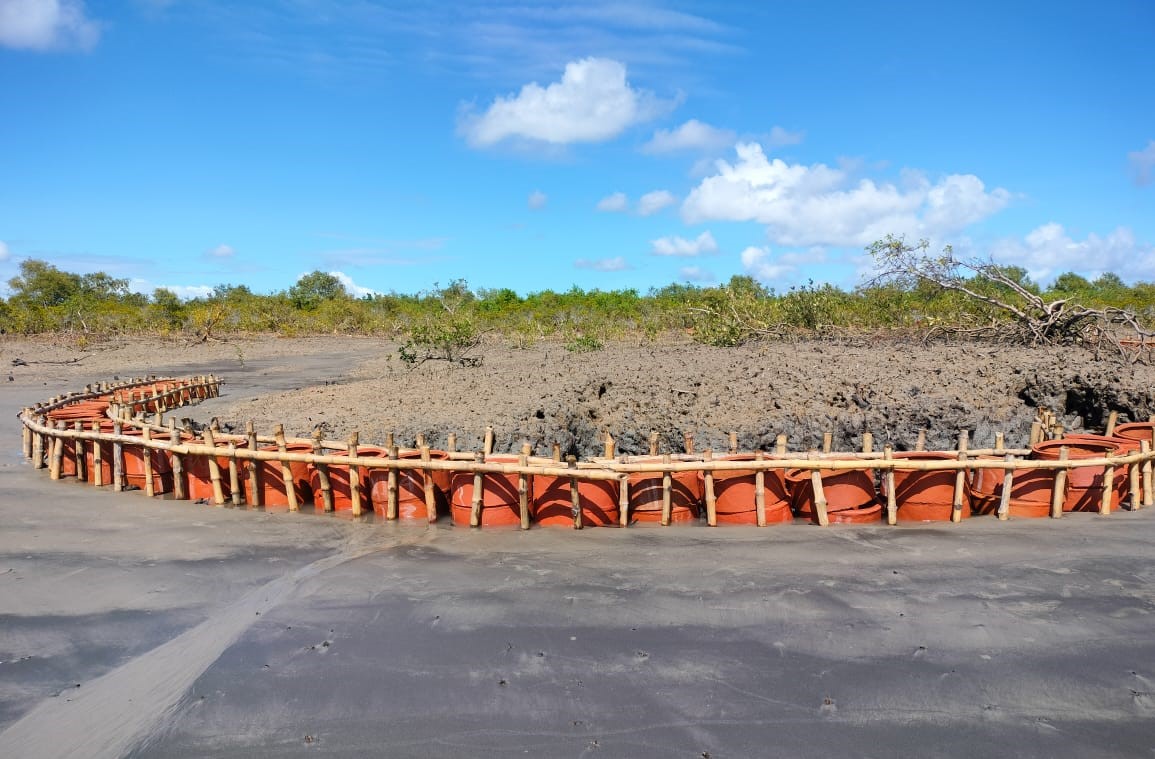
The results are encouraging as these rings have successfully trapped sediment, with accumulation ranging from 4 to 42 centimetres across different sites. More importantly, the trapped sediment is fostering natural mangrove growth, particularly in areas dominated by clay and silt deposits.
NATURE’S ENGINEERS AT WORK
Fascinating patterns revealed how these natural defences develop. During the late and post monsoon seasons, all sites except one on the eastern coast of the lower estuarine island exhibited natural mangrove regeneration. Sites in the middle estuary, where clay content was higher, showed better results for mangrove regeneration. Pioneer plant species like Porteresia coarctata emerged first, followed by Sueda maritima and Avicennia marina.
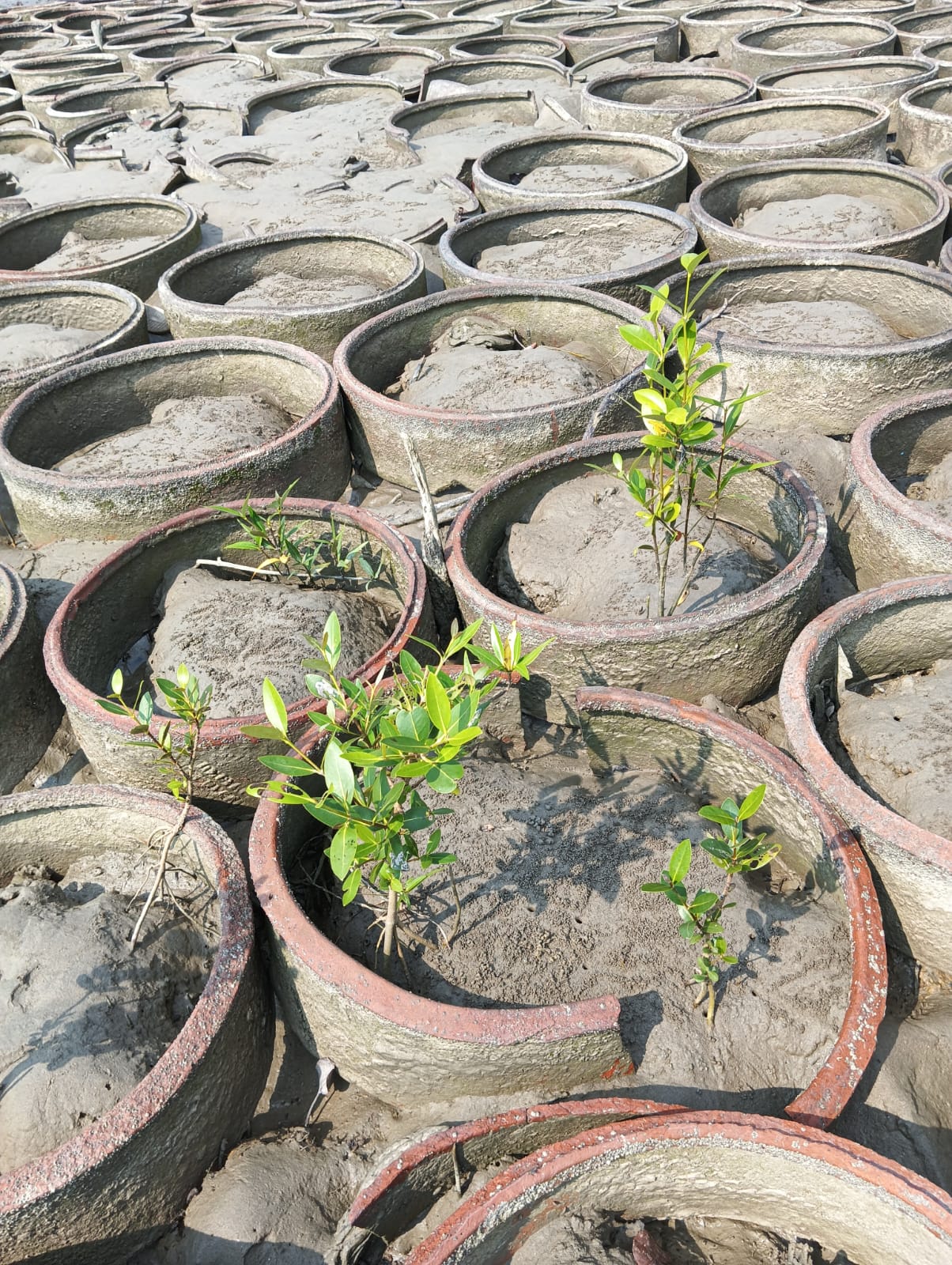
An unexpected bonus came from oysters – primarily Saccostrea cuculata and occasionally Crassostrea cuttackensis – which were found attached to the terracotta silt traps and began colonising the terracotta rings. These oysters could form natural reefs, providing additional protection against erosion and tidal surges.
The results highlight the potential of the nature-based, cost-effective solution to support mangrove regeneration and toe-line protection. This proof of concept has also opened new possibilities for sustainable elevation management in the sinking and shrinking mangrove region of the Sundarbans, a significant development in the face of climate change and accelerated sea-level rise.
COST EFFECTIVE
The Living Shoreline approach offers significant cost advantages over traditional protection methods. Installing terracotta rings costs approximately USD 7,700 per square kilometre, compared to USD 33,000 per square kilometre for conventional erosion control measures using eucalyptus poles and soil-filled gunny bags. Moreover, terracotta installations are maintenance-free, unlike traditional methods that require annual maintenance.
LOOKING AHEAD
While the initial results are promising, researchers emphasise that long-term observation is needed to assess how the system performs during extreme weather events. However, the success has already inspired action, with the West Bengal Forest Directorate and a local NGO initiating similar experiments.
Building on this and drawing on learnings from Sundarbans, WWF-India is now piloting the Living Shoreline in Kendrapara, Odisha, initially covering an area of 300–600 sq. metres. With support from relevant government partners, the initiative has the potential to scale up to nearly 300 hectares.
The Living Shoreline strategy not only protects existing embankments but also creates new habitats for biodiversity. This approach could be particularly valuable in addressing climate change and accelerating sea level rise. It’s a Nature-based Solution that works with the environment rather than against it.
This article is authored by Anamitra Anurag Danda and is based on research conducted by Paromit Chatterjee, Sugata Hazra, Anamitra Anurag Danda, Punyasloke Bhadury, Punarbasu Chaudhuri, and Sampurna Sarkar, published in the MDPI journal Sustainability and funded by the HSBC Climate Solutions Partnership.
 To read more about conservation insights from across India, please download NATURE MATTERS here.