

As a gentle breeze rippled through emerald onion fields in Shivni village, in Maharashtra's Jalna district near Aurangabad, 66-year-old Uddhav Khedekar paused to take in the view. To him, this thriving landscape is more than mere farmland; it exemplifies how a collective effort, driven by science and supported by the community, can make farming climate-resilient. Shivni stands as a living example of this year's Earth Day motto, "Our Power, Our Planet."
"There was a time when none of this seemed possible," he says quietly. "There was never enough rain."
For decades, Jalna has been water-scarce due to its geography. With average annual rainfall of just about 690 mm, a semi-arid climate, and low organic carbon levels (essential for crop growth), farming here has always been challenging. Moderate erosion stripped fertile topsoil, while high evaporation rates and failing water conservation structures limited groundwater recharge. As rainfall declined due to various climatic factors, farmers increasingly relied on groundwater, with reliance rising from 48% in 2009 to 55% by 2017—often leading to aquifer overdrawal (1).
Its results were visible across the landscape. In the late 1990s and early 2000s, cotton yields fell, soil fertility declined, and groundwater levels dropped. Increased irrigation sometimes damaged soil structure and biodiversity across the Godavari River basin, which is integral to the landscape. For many villages, survival depended on water tankers travelling nearly 100 kilometres.
Shivni was no exception. Additionally, it is located on a gentle slope, where a layer of basalt prevents rainwater from seeping into the ground and pooling.
Khedekar grew up in this reality.
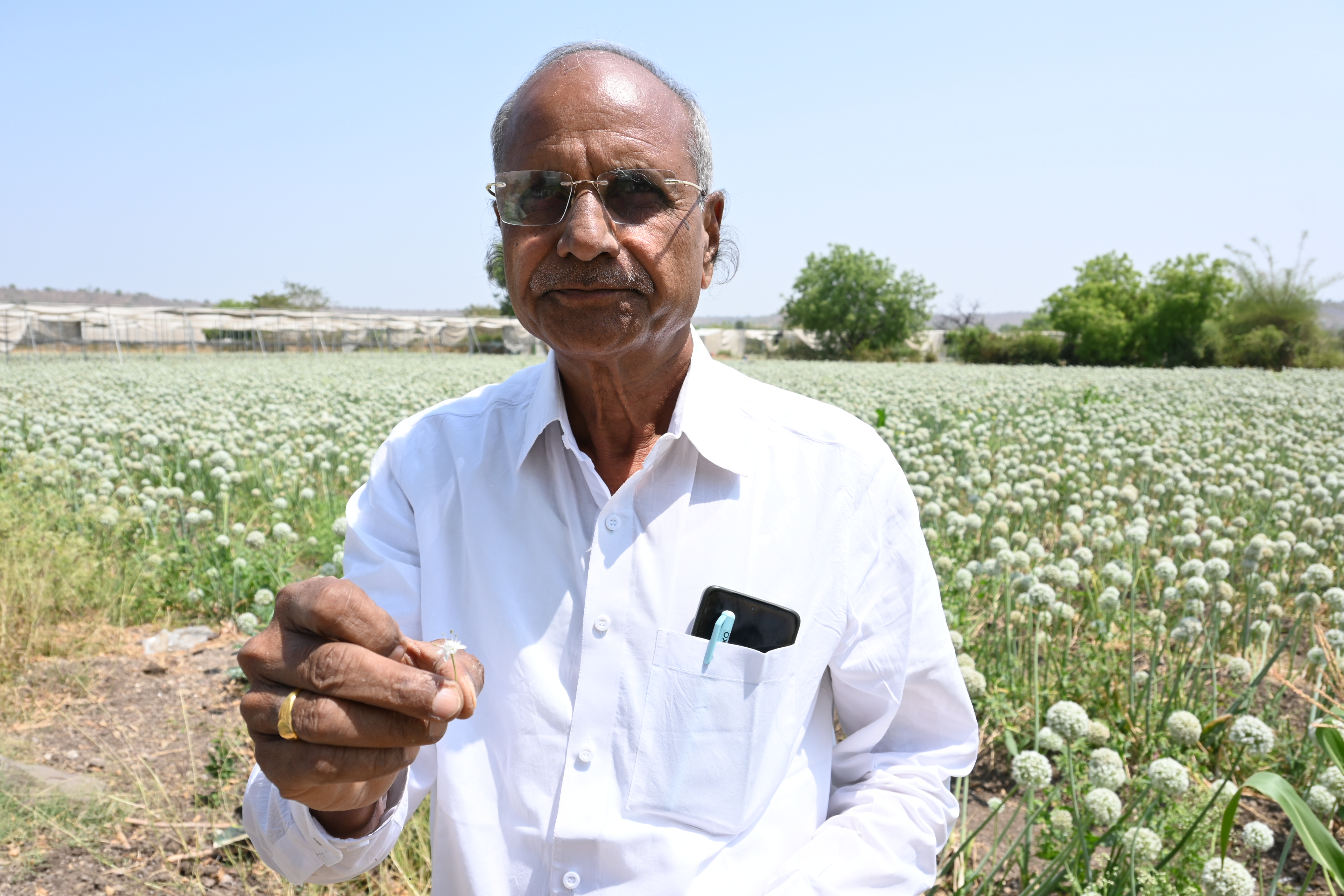
One man's science-led vision
"Rainfall from May to September was always limited, and whatever little we got just ran off. I realised there had to be a way to make the land productive", shares Khedekar
The farmers mainly cultivated cotton, maize, and onions, with a small amount of sugarcane in this region.
Trained as a mathematician, Khedekar returned to the village after completing his education in the early 1990s. He decided to address the age-old issue and began designing underground water storage structures—tanks, pits, and ponds—positioned along natural watersheds to capture and store rainfall. These acted as reservoirs, holding monsoon water that would otherwise be lost.
Khedekar paired this with drip irrigation, laying perforated pipes across fields so that water reached crops directly at the roots, reducing water waste while steadily improving soil health.
What began as one farmer's experiment soon became a community movement.
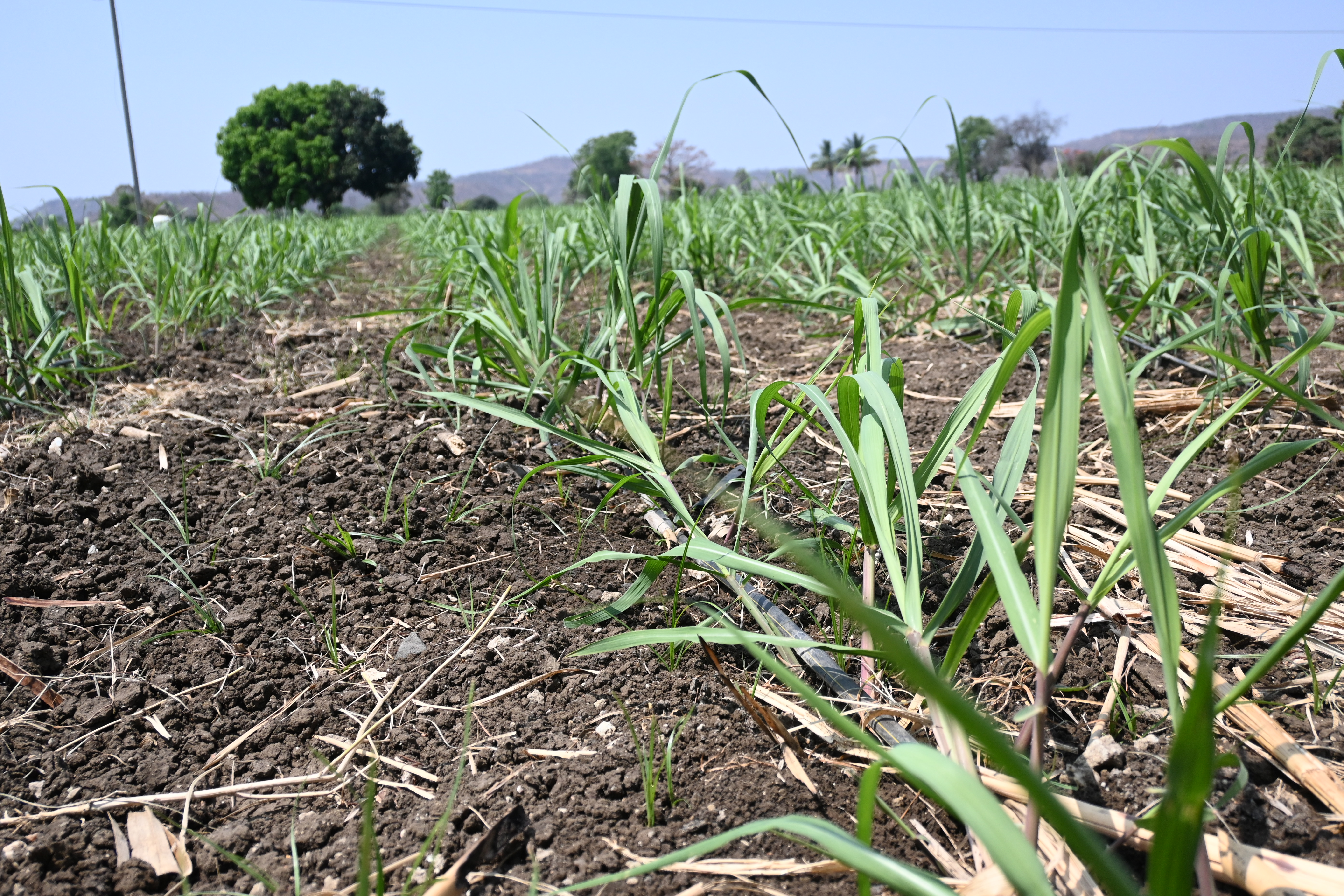
One of the drip mechanisms used to water the crops
The collective change
By 2013–14, Khedekar's vision had become a collective movement. Villagers joined hands to construct loose-boulder earthen dams and water-retention pools, allowing monsoon rains to be stored and released gradually throughout the year.
The transformation started showing. Once barren fields began producing onions, Bengal gram, and maize. Some farmers, buoyed by improved water availability, even ventured into cultivating water‑intensive crops such as sugarcane. Alongside these physical changes, Khedekar spearheaded awareness programmes that encouraged households to adopt rainwater‑harvesting techniques.
"The rabi and kharif crops have shown remarkable improvement since Uddhav dada's initiatives were implemented," says Pandu Rao, a farmer from Shivni village.
Khedekar's sustainable practices also gained national recognition. In 2013, he received the Jagjivan Ram Innovative Farmer's Award from former President Shri Pranab Mukherjee. The same year, he published a research paper with the Indian Agricultural Research Institute (IARI), documenting the outcomes and learnings from his work.
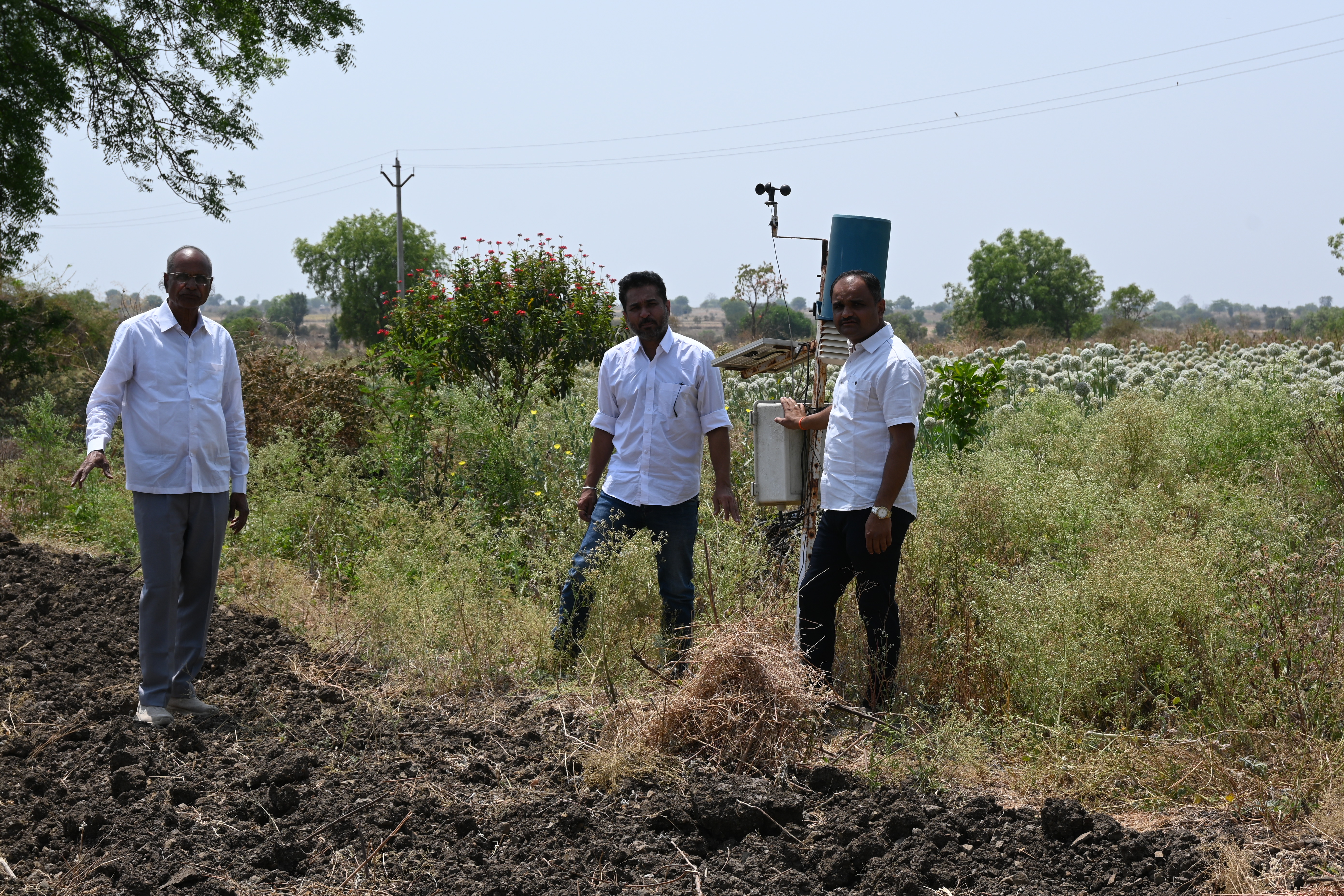
An on field weather station
Scaling solutions for people and planet
The ripple effects went well beyond a single village. In 2018, WWF-India, with support from IKEA, initiated a programme to help farmers adopt digital technologies that optimise water use and reduce stress on cotton farming, especially in water-scarce regions. The initiative also focuses on restoring degraded land through tree plantation, helping improve water availability and enabling more efficient and sustainable use of resources.
These issues have long-term effects on the climate and rainfall patterns in cotton-growing areas. Subsequently, they worked with Khedekar to expand their mission, promoting climate-resilient farming, enhancing water use efficiency, and emphasising that environmental care directly supports farmer prosperity.
Later in the years, Khedekar collaborated with WWF-India and IKEA, bringing in knowledge and experience, focusing not just on enhancing crop yields but also on supporting biodiversity conservation through various naturalpollination techniques.
"Honeybee pollination is essential for onion flowers," explains Khedekar. "By installing apiaries along the fields, we can produce high‑quality seeds that are extracted and replanted for better yields."
Nearly 30,000 farmers across more than 200 villages were engaged and adopted better water and land management practices.
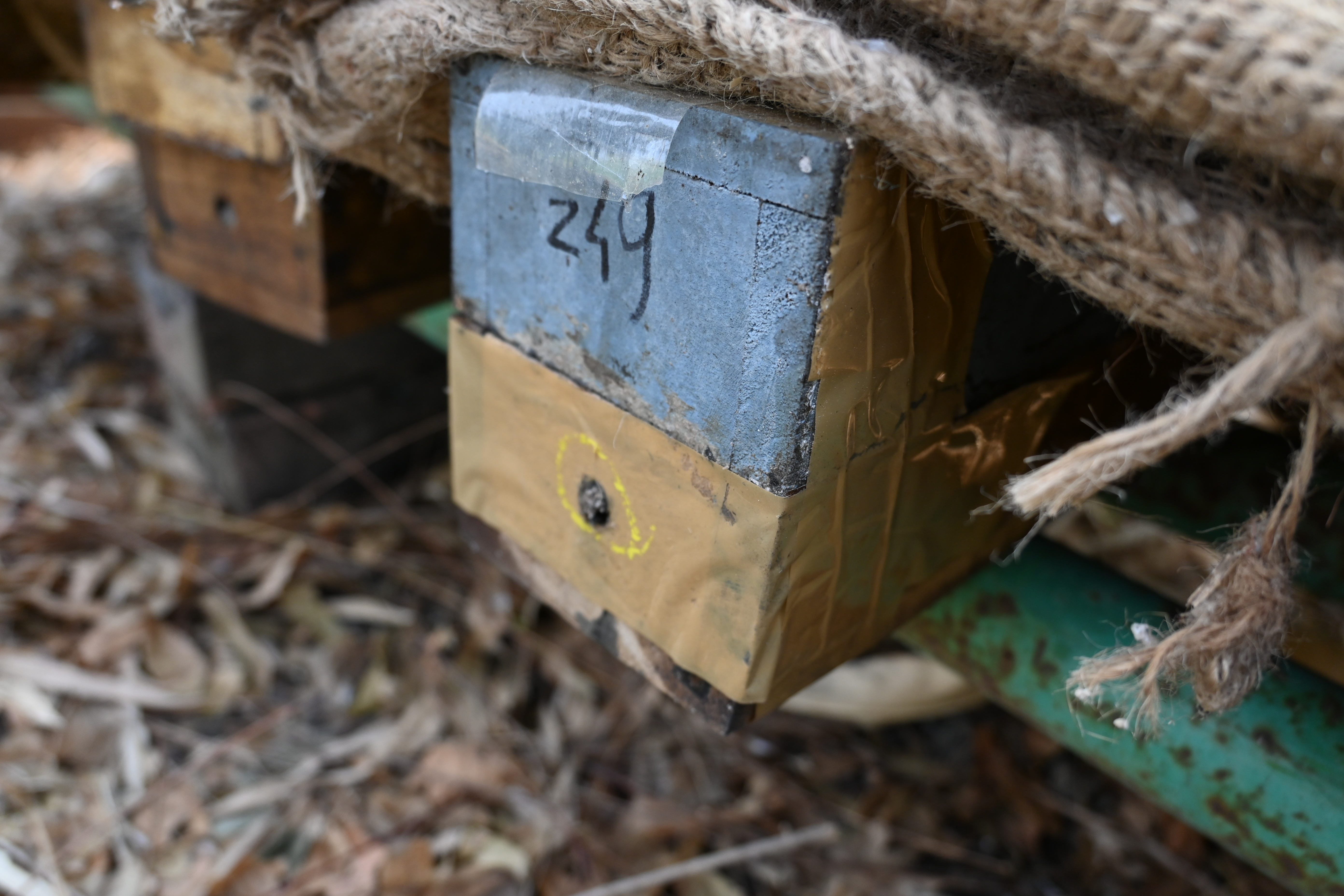
Apiary box installed at one of the farms in Shivni
Powering the future from the ground up
Later Khedekar himself built a successful farming enterprise, earning up to ₹40 lakh annually. Yet he remained focused on mentorship, helping farmers replicate solutions rather than depend on external aid.
Today, Shivni's next chapter is being written by the next generation. Together with his son Sharad, Khedekar has founded Keshavraj Agro Producers Company Limited (KAPCL)—a farmer-producer company that helps local farmers market their produce and share innovations. Sharad oversees daily operations and plans future expansion.
A miniature weather station now provides hyperlocal forecasts, helping farmers decide when to sow and harvest, reducing climate risk and crop loss.
Shivni's journey illustrates how local knowledge, collective effort, and rethinking science in harmony with nature can help adapt to climate change.