

 © WWF-India
Overview
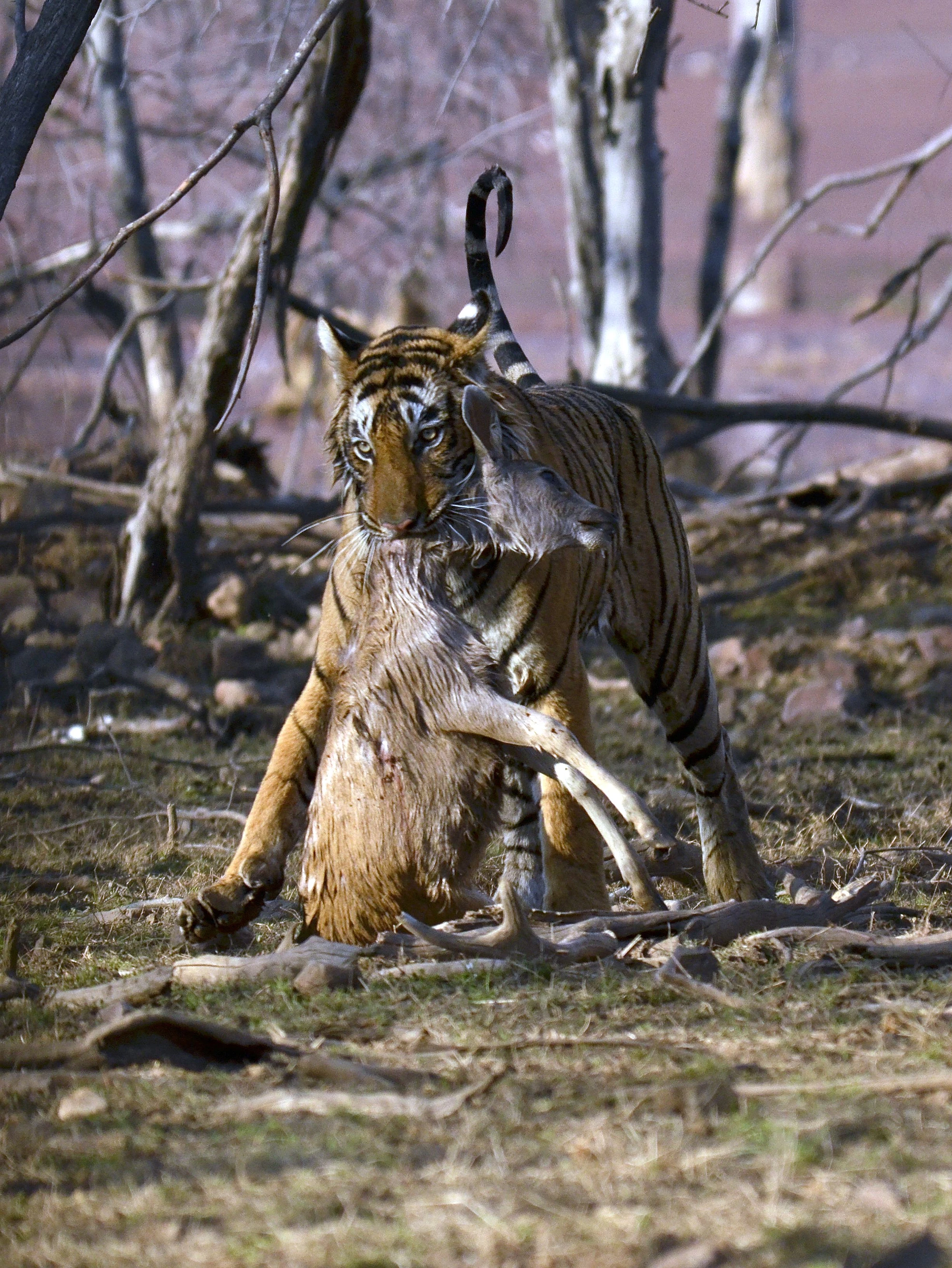
WWF-India’s Western India Conservation Landscape (WICL) spans approximately 200,000 square kilometres from the southeastern parts of Rajasthan to the northwestern parts of Madhya Pradesh. It includes seven tiger reserves, two national parks, 18 wildlife sanctuaries, and two conservation reserves. The landscape is a mosaic of natural habitats, ranging from semi-arid open vegetation to moist deciduous forests. It includes open natural ecosystems, scrub, thorn and dry deciduous forests, grasslands, and river and riparian habitats. The Chambal River, its tributaries, and the highlands of the Aravalli Range are key geographical elements of this landscape.
The semi-arid ecosystem of this landscape supports a remarkable range of biodiversity, including healthy populations of the tiger and the leopard. It also supports a diverse range of other wildlife species, such as caracal, desert cat, fishing cat, jungle cat, rusty-spotted cat, striped hyena, Indian grey wolf, dhole, Indian fox, and ratel, which have persisted in open habitats. The landscape hosts migratory bird species such as harriers, several species of vultures, and other long-distance migrants from Europe, Central Asia, Siberia and Southeast Asia. In addition, local communities such as the Gujjars, Meenas and Sahariyas have deep cultural ties to this landscape and rely on the open natural ecosystems for their livelihood, which is primarily agro-pastoral.
The Western India Conservation Landscape faces diverse and growing threats, including habitat fragmentation and degradation, land-use change, the proliferation of invasive species, and human-wildlife conflict. Underlying drivers include anthropogenic pressures such as large-scale mining, flattening of critical ravine ecosystems, over-extraction of natural resources, habitat encroachment, zoonotic disease transmission, linear infrastructure impact, poaching and illegal trade, as well as climate impacts that stress both ecosystems and communities.
 © WWF-India
OUR WORK – Western India Conservation Landscape
WWF-India has adopted a landscape-level approach that emphasises maintaining connectivity between the region’s protected areas, strengthening legal safeguards, enhancing community livelihoods, and building community institutions for natural resource stewardship. The organization uses science-based management, improved wildlife monitoring, and targeted threat mitigation to strengthen conservation initiatives in the landscape. WWF-India also works to mitigate the impact of linear infrastructure on wildlife, restore habitats, conduct long-term monitoring and develop recovery plans for species of conservation concern.

KEY PILLARS OF OUR WORK:
- The Dholpur–Karauli Tiger Reserve, Kailadevi Wildlife Sanctuary, Mukundra Hills Tiger Reserve and Ramgarh Tiger Reserve in Rajasthan, along with the Madhav Tiger Reserve in Madhya Pradesh, are emerging as key potential sites for tiger recovery across this landscape. WWF-India has contributed to these efforts and worked closely with the Rajasthan Forest Department for the translocation of tigers across these sites.
- WWF-India has supported the Rajasthan and Madhya Pradesh Forest Departments in wildlife monitoring by providing technical inputs and equipment to monitor tigers, co-predators, prey and habitats across various protected areas. This effort has generated valuable data and even led to notable discoveries, including the detection of species such as the fishing cat in the Mukundra Tiger Reserve and the Indian wild dog (dhole) in Kuno National Park.
- Since 2017, over 2,000 forest department personnel have been trained to handle incidents related to wildlife crime. Additionally, two wildlife sniffer dogs have been provided by WWF-India to the Ranthambore Tiger Reserve in Rajasthan and to the Kuno National Park in Madhya Pradesh to assist with wildlife crime detection and prevention.
WWF-India works with local communities and the forest department to mitigate human-wildlife conflict in villages around protected areas. Over the past decade, high-conflict corridor areas were mapped and more than 100 solar lights were installed in identified conflict spots to ensure visibility and prevent negative interactions with wildlife.
- WWF-India has supported more than 8,000 households in 46 villages around the Ranthambore Tiger Reserve (RTR-I & II), linking conservation with income generation and clean energy and promoting human–wildlife coexistence. Community members were provided with fodder-replacement equipment to reduce incidents of cattle straying into forest areas, and 40 biogas units were set up in some villages to reduce the community’s dependence on firewood.
- Between 2017 and 2025, 2,648 livestock were vaccinated across 13 villages to help reduce the risk of disease transmission from livestock to wildlife.
 © shutterstock.com
Support Conservation
Your contribution helps us in protecting wildlife, restoring habitats and building a better future for people and nature.
Donate