 © Wirestock Creators/Shutterstock.com
Overview
Humanity is drawing on natural resources 1.5 times faster than the planet can sustainably regenerate. This growing imbalance is degrading nature, affecting human well-being and threatening long-term sustainability. As populations grow and incomes rise, pressure intensifies on natural systems. This manifests in overfishing, deforestation, biodiversity loss, pollution, water stress and climate change—issues closely linked to production and consumption patterns.
As a developing economy, India faces growing environmental pressures arising from limited natural resources and increasing dependence on imported raw materials. These dynamics underscore the pivotal role that business and industry must play.
India’s production, consumption and trade patterns extend their environmental footprint far beyond national borders, contributing to the loss and degradation of rainforests and other critical ecosystems in regions of exceptional ecological significance. These include the Amazon, the Congo Basin, Southeast Asian rainforests such as Borneo, as well as Coastal East Africa and the Coral Triangle. For businesses, ensuring the sustainable use of the natural resources and ecosystems that support their value chains is both a responsibility and a strategic necessity.

OUR WORK
Working in close partnership with businesses, WWF-India enables the identification and deployment of strategic solutions that reduce material, environmental and transition risks while strengthening competitiveness and long-term value creation. These interventions span sustainable finance, water stewardship, climate innovation, deforestation- and conversion-free (DCF) supply chains for forest-risk commodities, accelerated energy transition through renewable energy adoption, circular economy in plastics and e-waste, and the decarbonisation of industrial value chains—positioning businesses to thrive in a resource-constrained, low-carbon future. The programme focusses on activating key levers for systemic transition, including science-based policy engagement and capacity building, market transformation and the mobilisation of sustainable finance. It enables businesses to align growth with nature-positive outcomes.

WWF-India partners with businesses to advance circular economy solutions that reduce environmental impact while also delivering inclusive socio-economic outcomes across value chains. The programme drives measurable downstream commitments from brands, manufacturers and retailers, including circular product design, increased use of recycled content and responsible procurement, while integrating informal sector stakeholders upstream to strengthen collection, sorting and recycling systems in a safe, dignified and economically viable manner.
WWF-India supports scalable, market-ready models for waste recovery and material reuse that prevent leakage into landfills and natural ecosystems. The programme also enables policy reforms and mobilises investment in recycling infrastructure and innovation, helping businesses build resilient, compliant and socially inclusive circular value chains aligned with long-term sustainability and ESG priorities.
WWF-India partners with businesses to accelerate credible, science-aligned climate action that delivers measurable emissions reductions and long-term resilience. The programme supports companies across their transition journey—from setting science-based targets and reducing greenhouse gas emissions to securing renewable energy and deploying climate-smart innovations—enabling a shift towards cleaner, low-carbon operations aligned with conservation outcomes.
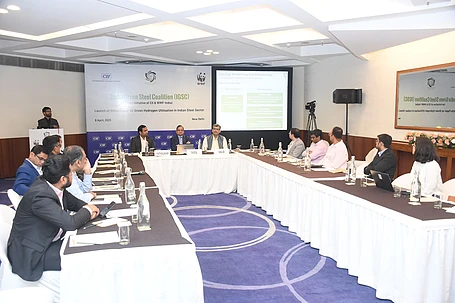
WWF-India drives impact at scale by strengthening enabling policies and fostering collaboration in high-emission sectors, including steel, to unlock collective action, increase renewable energy adoption, and enhance transparency across energy value chains. In parallel, WWF-India works closely with the start-up and innovation ecosystem to identify, pilot and scale solutions that align climate action with nature conservation, supporting technologies and business models that reduce emissions while delivering positive outcomes for ecosystems and communities.
Through technical guidance aligned with global frameworks such as the Science Based Targets initiative (SBTi) and the Science Based Targets network (SBTn), WWF-India helps businesses manage climate risks, meet regulatory and investor expectations and build resilience to climate change—while fostering an innovation ecosystem that accelerates climate- and nature-positive transitions.
WWF-India works with businesses to eliminate deforestation and ecosystem conversion from supply chains for priority forest-risk commodities such as palm oil, natural rubber and timber. This reduces India’s global environmental footprint and safeguards critical ecosystems. The programme supports companies in strengthening traceability, transparency and accountability across value chains through the adoption of credible sustainability standards and certifications.
WWF-India also engages with policymakers and market actors to enable trade and production frameworks that mainstream DCF practices. By facilitating market transformation and scaling demand for sustainably sourced and certified commodities, the programme helps businesses manage supply-chain risks, meet evolving regulatory and investor expectations, and contribute to nature-positive outcomes.
WWF-India partners with banks, investors, financial institutions and key financial regulators, including the Reserve Bank of India (RBI) and the Securities and Exchange Board of India (SEBI), to integrate nature-related risks and opportunities into financial decision-making, strengthening financial system resilience and long-term value creation. The programme advances greening finance—embedding environmental, climate and nature considerations into lending, investment and risk assessment—and financing green—mobilising capital towards sustainable and nature-positive development.
A core aspect of this work is WWF’s Landscape Finance Approach, which aligns public and private finance to support integrated, landscape-level solutions that deliver measurable conservation, climate and livelihood outcomes. By directing capital to priority landscapes and sectors, including infrastructure, soft commodities, plastics and steel, WWF-India catalyses transition and blended finance mechanisms that reduce environmental risk, enhance ecosystem resilience and scale conservation impact where it matters most.
 © shutterstock.com
Support Conservation
Your contribution helps us in protecting wildlife, restoring habitats and building a better future for people and nature.
Donate