 © Davdeka/shutterstock.com
Overview
India has around 0.25% of the world’s total coastline, which is over 11,000 km, and an Exclusive Economic Zone (EEZ) of over 2.2 million sq. km. This supports a variety of ecosystems, ranging from mangroves to coral reefs, seagrass, mudflats, intertidal regions, estuaries and salt marshes. An astonishing variety of biodiversity inhabits these ecosystems, serving as a source of livelihood and food security for over 40 million people. It also supports various forms of fisheries, ranging from mechanised to non-mechanised and artisanal, making India the third-largest seafood producer in the world.
Exploitation of marine resources threatens species and causes irreversible habitat degradation. Threats such as IUU (Illegal, Unreported, and Unregulated) fishing, overexploitation, bycatch, illegal trade, unsustainable aquaculture, and pollution require urgent attention and resolution through innovative conservation practices.

OUR WORK – OCEANS & COASTS

KEY PILLARS OF OUR WORK:
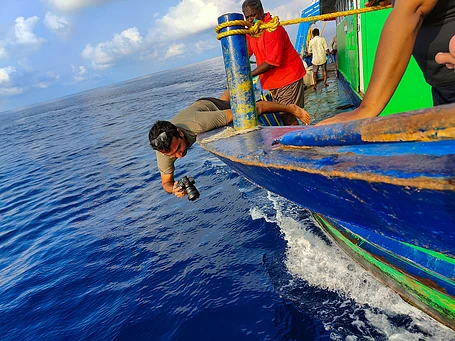
Non-selective fishing gear often traps juveniles and non-target species, leading to stock decline and ecosystem imbalance. To help maintain healthy populations of key marine species in Indian waters, WWF-India works to reduce fishery bycatch, especially of sharks, rays, turtles and marine mammals. WWF-India also monitors unsustainable fishery harvests, addresses illegal trade and explores improved models for marine conservation areas.
Healthy species need healthy habitats. India’s coral reefs, mangroves and coastal wetlands are rapidly degrading—driven by development pressures, pollution and practices such as large-scale shrimp farming. Protecting and restoring these ecosystems is central to WWF-India’s work to secure long-term resilience and biodiversity.
As global fish stocks decline, India—the world’s third-largest seafood producer—must rapidly transition to sustainable fishing practices. Overfishing, destructive gear and high bycatch threaten marine ecosystems and food security. WWF-India collaborates with governments, fishers, exporters and coastal communities to enhance fisheries management and promote responsible sourcing.
WWF-India addresses unsustainable practices in the fishmeal and fish oil sector by reducing dependence on bycatch-driven fisheries and exploring sustainable alternatives for the reduction industry. The efforts include promoting Bycatch Reduction Devices (BRDs) to limit juvenile catch, which is diverted to fishmeal, and convening state and national dialogues on reducing reduction fisheries from a food-security perspective.
WWF-India also supports global certification programmes such as the Marine Stewardship Council (MSC) and Aquaculture Stewardship Council (ASC). India’s first MSC certification—the Ashtamudi short-necked clam fishery—set a national benchmark. WWF-India now advances certification for deep-sea shrimp, pole-and-line tuna and mud crab fisheries, while supporting ASC-aligned shrimp aquaculture.
WWF-India’s work along the northeastern coast of India focusses on one of the world’s most cyclone-prone regions, where rapid land-use change, shrinking agricultural areas and expanding coastal infrastructure intersect with extreme poverty and high dependence on natural resources. These pressures heighten vulnerability for both coastal communities and critical ecosystems that support globally threatened species, such as the Irrawaddy dolphin, mangrove horseshoe crab and olive ridley turtle.
WWF-India’s programme strengthens the resilience of coastal seascapes by restoring ecosystem health and reinforcing community livelihoods through targeted, long-term interventions. By integrating habitat restoration with climate-risk reduction and livelihood security, we aim to enhance adaptive capacity and restore the ecological integrity of these vital coastal systems.
 © shutterstock.com
Support Conservation
Your contribution helps us in protecting wildlife, restoring habitats and building a better future for people and nature.
Donate