

 © Rohit Beniwal/shutterstock.com
Overview
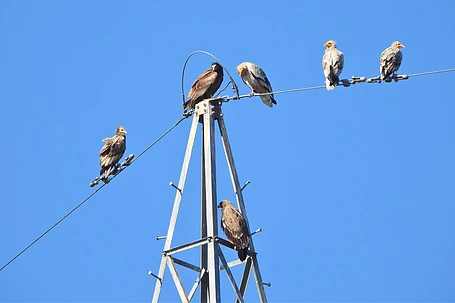
Raptors are birds of prey and include eagles, vultures, kites, harriers, hawks, falcons and owls. As apex predators and scavengers, raptors maintain ecological balance by regulating prey populations, removing carcasses to prevent disease, and acting as indicators of ecosystem health.
India is home to over 100 species of raptors, including some of the world’s most threatened birds. Of the nine vulture species found in India, six species— white-rumped vulture, Indian vulture, slender-billed vulture, Egyptian vulture, red-headed vulture and bearded vulture—are listed as Critically Endangered on the IUCN Red List. The forest owlet, once believed extinct, has been rediscovered in central India in 1997, indicating both the fragility and the resilience of these birds. India also hosts some remarkable migrant species, such as the steppe eagle, greater spotted eagle, Amur falcon and peregrine falcon, connecting India to global flyways across continents.
Raptor populations have been declining due to several significant threats, notably electrocution from high-tension power lines, poisoning, and the harmful effects of non-steroidal anti-inflammatory drugs (NSAIDs) like diclofenac. Habitat fragmentation, urban expansion and food scarcity also significantly jeopardise the future of these species.

OUR WORK – RAPTOR CONSERVATION
The Raptor Conservation Programme began in Madhya Pradesh, Uttarakhand, Rajasthan, Assam and Karnataka, each state presenting a unique landscape and hosting a diverse range of raptor species. The programme is now expanding, and strategic raptor monitoring has been initiated in Kerala, Odisha (with a focus on white-bellied sea eagles) and West Bengal (focused on owls) through partnerships with local organisations. Additionally, WWF-India is supporting the Tamil Nadu Forest Department in integrating raptor conservation into the Coimbatore Master Plan 2041. These regions are ecologically critical and require targeted efforts to protect raptor habitats and the ecosystems they support.

KEY PILLARS OF OUR WORK:
WWF-India undertakes monitoring exercises to provide science-based data on raptor populations and habitats to forest departments for conservation planning. It engages in field research, satellite tracking and citizen-science initiatives such as eBird to study distribution, movement and breeding behaviours. These efforts identify critical breeding and feeding sites, informing targeted conservation actions. Additionally, research aims to understand genetic diversity and ecological dependencies to support better management decisions at regional and national scales.
Raptors face threats from human activities. Collisions with powerlines, electrocution, poisoning from contaminated carcasses, and exposure to toxic veterinary drugs have led to notable declines. The programme collaborates with state forest departments, power utilities and local authorities to retrofit high-risk power lines, create feeding zones free of harmful drugs, and improve carcass disposal systems in line with national waste-management guidelines. Disease and toxin monitoring is being strengthened through a One Health approach, linking raptor health to management of livestock, waste and environment. These efforts aim to ensure safer skies and cleaner food sources for birds of prey.
WWF-India works closely with Gram Panchayats and custodians of community-managed lands, such as Orans, to integrate raptor protection into local development plans. Training and capacity-building activities are conducted to enable local institutions to monitor nests, report injured birds and preserve habitats. Awareness campaigns and nature clubs foster positive attitudes and behaviours toward raptors. Local champions are acknowledged for their leadership and encouraged to take responsibility for conservation efforts within their villages.
WWF-India supports state forest and wildlife departments, managers of protected areas, veterinary officials and civic authorities through training and knowledge exchange to institutionalise and sustain efforts for raptor conservation. Customised course modules, standard operating procedures and best-practice documents are developed to improve raptor management and rescue operations. Additionally, there are initiatives to incorporate raptor conservation into existing policy frameworks such as State Biodiversity Action Plans, Forest Working Plans, and District Environmental Plans. These steps help ensure that raptors become an integral part of environmental planning and decision making.
Public awareness is essential for the conservation of raptors. WWF-India undertakes campaigns, participates in exhibitions and engages in digital storytelling to highlight the significance of these birds in the natural world. Over one lakh people have been engaged through events, outreach sessions and school programmes from 2021 to 2026.
 © shutterstock.com
Support Conservation
Your contribution helps us in protecting wildlife, restoring habitats and building a better future for people and nature.
Donate